
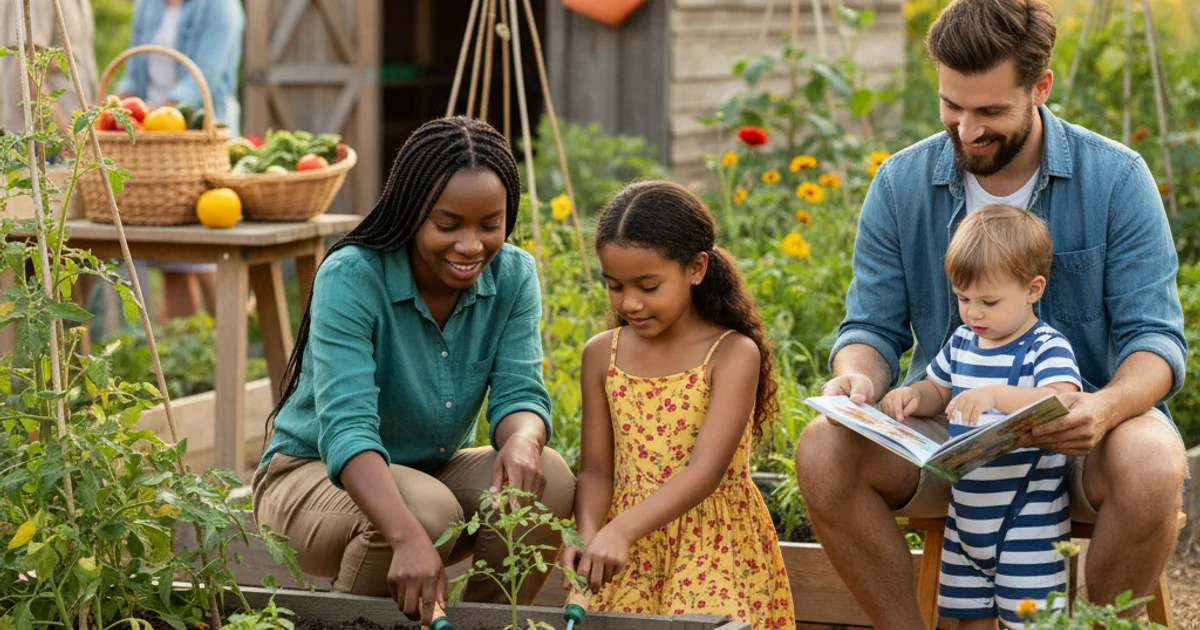
There is something magical about watching a child plant a seed for the first time. The careful way they press it into the soil, the anticipation of checking for sprouts each day, and the pure delight when a tiny green shoot finally breaks through. At BrightRoots, we believe these moments are not just charming. They are powerful learning experiences that shape how children understand the world around them.
Our Community Garden program, now in its eighth year, gives young children and their families the opportunity to grow food, explore nature, and build community together. What started as a small raised-bed project behind our learning center has grown into a thriving outdoor classroom that serves more than 200 families each growing season.
A Living Classroom
The BrightRoots garden is designed specifically for young learners. Raised beds are built at child-friendly heights. Pathways are wide enough for wagons and wheelchairs. Signage features both words and pictures so that pre-readers can navigate independently. Every element is intentional, creating a space where children feel ownership and confidence.
Throughout the growing season, our educators lead weekly garden sessions for enrolled families. Each session combines hands-on gardening activities with age-appropriate lessons that connect to early learning standards. Children are not just planting seeds. They are counting them, sorting them by size, predicting which will sprout first, and recording their observations in garden journals.
What Children Learn in the Garden
The garden is a natural environment for building skills across every developmental domain.
Science and inquiry. Children observe life cycles firsthand, from seed to sprout to flower to fruit. They learn about weather, soil, insects, and pollination through direct experience. They ask questions, form hypotheses, and test them, practicing the foundations of scientific thinking.
Math and measurement. Gardening involves counting seeds, measuring plant growth, comparing sizes, and understanding patterns. Children learn concepts like more and less, taller and shorter, and before and after in a context that feels meaningful and real.
Language and literacy. Every garden session is rich with new vocabulary: germinate, compost, harvest, pollinate. Children narrate their observations, describe textures and smells, and share stories about their plants. Many families report that garden vocabulary shows up in conversations at home for weeks afterward.
Social-emotional development. Gardening teaches patience, responsibility, and cooperation. Children learn to take turns with tools, share the harvest, and care for living things. They experience the pride of nurturing something from start to finish and the resilience of coping when a plant does not survive.
Nutrition and health. Children who grow their own food are significantly more likely to try new fruits and vegetables. Our garden program includes simple, healthy cooking activities where families prepare snacks using ingredients they have grown themselves. Many parents tell us their children willingly eat vegetables at home that they previously refused, simply because they helped grow them.
Seasonal Highlights
The garden program follows the natural rhythm of the seasons, giving children a sense of time and change that is hard to replicate indoors.
In spring, families prepare beds, start seeds indoors, and transplant seedlings. Children learn about soil health and the conditions plants need to grow. In summer, the focus shifts to daily care, watering, weeding, and watching the garden come alive. Children harvest strawberries, snap peas, and cherry tomatoes, often eating them right off the vine.
Fall brings the excitement of the pumpkin patch, sunflower seed counting, and the annual harvest celebration, one of the most beloved events on the BrightRoots calendar. Families gather to share a meal made entirely from garden produce, and children display their garden journals and artwork.
Even winter has its place. Indoor activities include seed sorting, plant-themed art projects, and planning next year's garden layout. Children learn that rest and preparation are part of every cycle.
Growing Together
One of the most meaningful aspects of the Community Garden program is the way it brings families together. Parents and grandparents garden alongside their children, learning new skills and building connections with other families. Several longtime friendships in our community trace their roots back to conversations over a shared garden bed.
We also partner with local food banks to donate surplus produce, teaching children about generosity and community responsibility from an early age.
If your family would like to join the BrightRoots Community Garden program, registration for the spring season opens in April. No gardening experience is needed, just a willingness to get a little dirt under your fingernails and a lot of wonder in your heart.