When we say that every child belongs at BrightRoots, we mean it in the fullest sense. Every child, regardless of ability, background, language, or learning style, deserves access to a high-quality early learning experience in a community that sees them, values them, and supports their growth. Inclusion is not something we add on to our programming. It is the foundation upon which everything else is built.
Creating truly inclusive early learning spaces requires more than good intentions. It requires intentional design, ongoing professional development, strong partnerships with families and specialists, and a willingness to continually learn and adapt.
What Inclusion Looks Like
In an inclusive classroom, children with and without disabilities learn side by side. Activities are designed with enough flexibility to meet a range of developmental levels and learning styles. The physical environment is accessible and welcoming. And the social-emotional climate communicates clearly that differences are natural, valuable, and celebrated.
At BrightRoots, inclusion shows up in both big and small ways. It shows up in the way we arrange our classroom furniture to ensure wheelchair accessibility. It shows up in the visual schedules and picture communication boards that support children who process information differently. It shows up in the sensory-friendly quiet spaces where children can regulate when the classroom feels overwhelming. And it shows up in the conversations we have with children about why everyone is different and why that is a wonderful thing.
Universal Design for Learning
Our approach to curriculum is grounded in the principles of Universal Design for Learning, a framework that encourages educators to provide multiple means of engagement, representation, and expression. In practice, this means that for any given learning objective, we offer several different pathways for children to access the content and demonstrate their understanding.
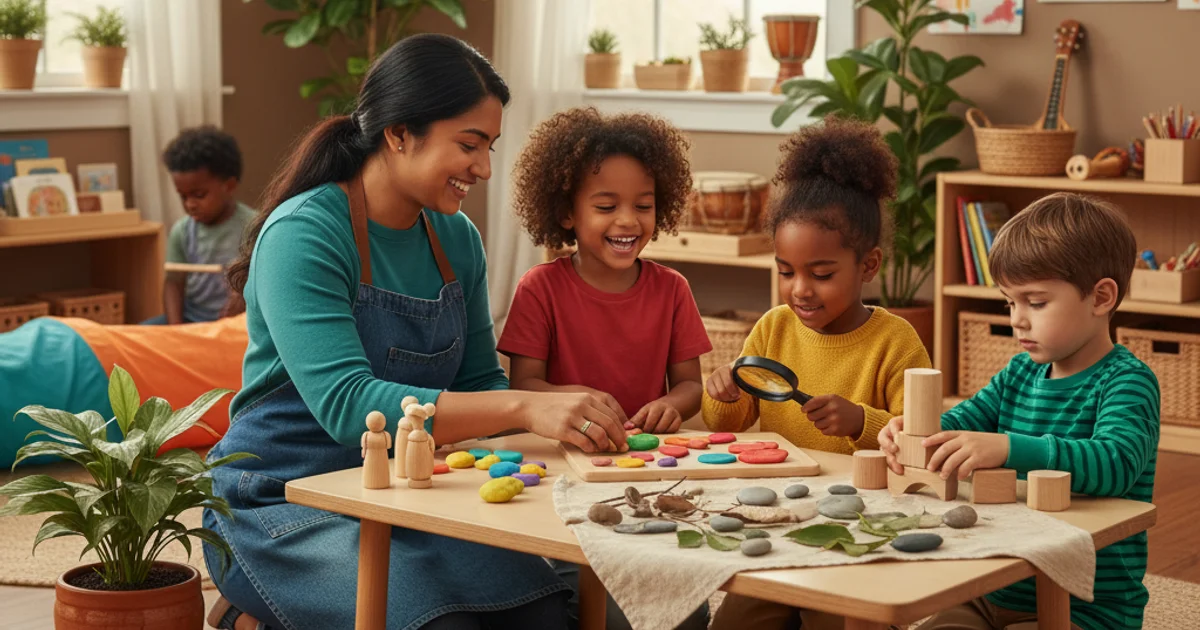
If the learning goal is to explore the concept of patterns, for example, one child might create patterns with colored blocks, another might clap a rhythmic pattern with a drum, and a third might arrange natural objects in a sequence on the light table. The goal is the same; the pathways are tailored to each child's strengths and needs.
This approach benefits all children, not just those with identified disabilities. Every child has a unique learning profile, and when we design for diversity from the start, the whole community thrives.
Partnerships With Families and Specialists
Families are the most important experts on their own children, and their insights are essential to creating an effective inclusive environment. When a child has a disability or developmental difference, we work closely with the family to understand the child's strengths, challenges, preferences, and goals.
We also collaborate with early intervention specialists, speech therapists, occupational therapists, and other professionals who may be part of a child's support team. These specialists are welcomed into our classrooms, and we work together to integrate therapeutic goals into the child's daily experience rather than pulling them out for isolated sessions.
This integrated approach means that a child receiving speech therapy, for example, might work on their communication goals during a naturally occurring activity like snack time or dramatic play, surrounded by peers and supported by familiar adults.
Building a Culture of Belonging
Inclusion is ultimately about culture — the unspoken messages that a learning environment sends about who is welcome and who is valued. We build this culture through the books we read, which feature characters with diverse abilities and backgrounds. We build it through the language we use, which emphasizes what children can do rather than what they cannot. We build it through the way we handle conflict, which teaches children to be curious about differences rather than fearful.
Our educators receive ongoing training in inclusive practices, implicit bias awareness, and trauma-informed care. We recognize that building an inclusive community is not a destination but a continuous journey that requires reflection, humility, and commitment.
The Impact on All Children
Research consistently shows that inclusive environments benefit all children, not just those with disabilities. Children who learn alongside peers with diverse abilities develop stronger empathy, more flexible thinking, and a broader understanding of the human experience. They learn early that people come in many different forms and that every person has something valuable to contribute.
At BrightRoots, we see this every day. We see children spontaneously helping a peer who is struggling. We see friendships that cross every category adults might use to divide. We see a community of young learners who are growing up with the understanding that belonging is not something you earn — it is something everyone deserves.
If you have a child with a disability or developmental difference and are looking for an inclusive early learning environment, we invite you to visit BrightRoots. Every child belongs here.