
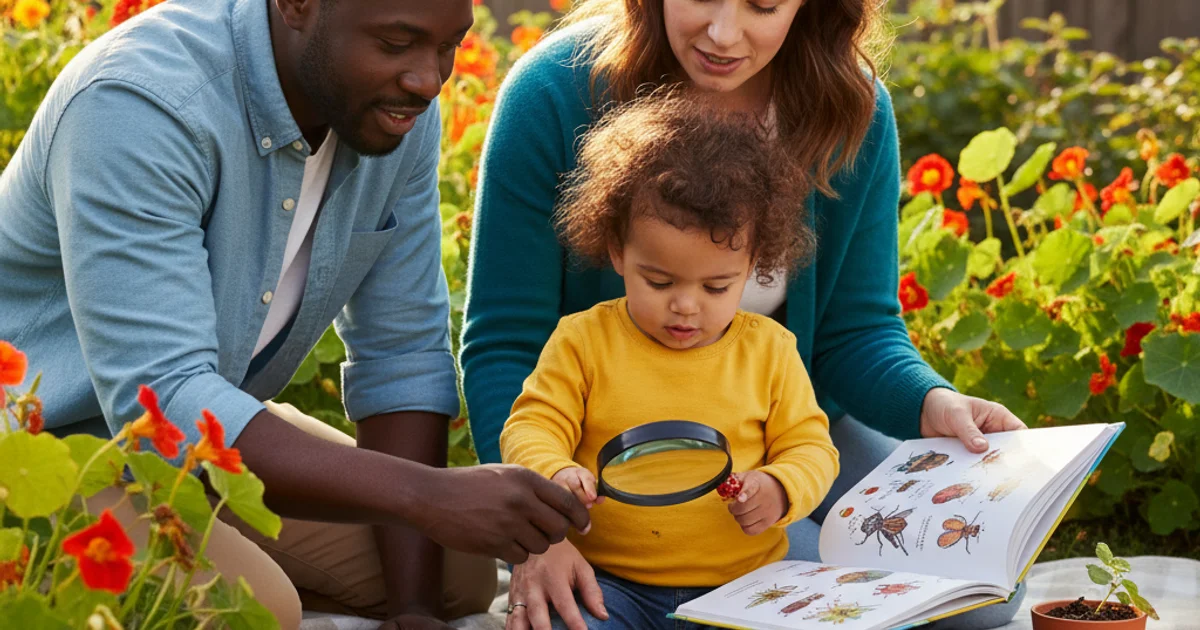
If you have ever watched a toddler discover a puddle for the first time, you already know what curiosity looks like in its purest form. The wide eyes, the tentative first step, the splash, the look of pure delight — and then the immediate desire to do it again. For young children, every moment is an opportunity to learn, and curiosity is the engine that drives that learning forward.
At BrightRoots, we believe that curiosity is not a trait some children have and others lack. It is a universal feature of early childhood, wired into the developing brain as a survival mechanism. Our job as parents and educators is not to create curiosity but to protect it, feed it, and give it room to grow.
Why Curiosity Matters So Much
Research in developmental neuroscience has shown that when children are curious about something, their brains are primed to learn. Curiosity activates the hippocampus, the region of the brain associated with memory formation, which means that information encountered during a state of curiosity is more likely to be retained. In practical terms, a child who is genuinely interested in how a caterpillar moves will learn more from five minutes of observation than from an hour of instruction on a topic that does not engage them.
Curiosity also builds persistence. When toddlers are driven by their own questions, they are more willing to try again after failure. The block tower that keeps falling becomes a puzzle to solve rather than a source of frustration. This kind of intrinsic motivation is one of the strongest predictors of long-term academic success.
Signs of Curiosity in Toddlers
Curiosity does not always look the way adults expect. It is not limited to asking questions, especially in children who are still developing language. In toddlers, curiosity often shows up as repetitive actions — opening and closing a cabinet door dozens of times, pouring water from one container to another, or dropping objects from a highchair to watch them fall.
These behaviors might look like mischief, but they are actually experiments. Your child is forming hypotheses and testing them. What happens if I drop the spoon again? Does it always make that sound? What about the cracker? Each repetition refines their understanding of cause and effect, gravity, and the properties of different materials.
How to Nurture Curiosity at Home
Create a yes environment. Rather than constantly redirecting toddlers away from things they cannot touch, try to create spaces where exploration is safe and encouraged. A low shelf with rotating toys, a basket of safe kitchen items, or a patch of garden to dig in can provide hours of rich exploration.
Resist the urge to explain everything. When your child encounters something new, pause before jumping in with explanations. Give them time to observe, touch, and form their own understanding. A simple "What do you notice?" can be more powerful than a lecture.
Model curiosity yourself. Children learn by watching the adults around them. When you wonder aloud about why the sky changes color at sunset or how a plant grows from a tiny seed, you show your child that curiosity is a lifelong trait worth cultivating.
Follow the detour. When a walk to the park turns into a twenty-minute investigation of an anthill, try to go with it. These unplanned moments of deep engagement are some of the most valuable learning experiences your child will have.
The BrightRoots Approach
In our toddler programs, we design environments that invite curiosity at every turn. Loose parts, natural materials, and open-ended play stations give children the freedom to explore on their own terms. Our educators are trained to observe first and intervene gently, asking questions that extend thinking rather than providing answers that shut it down.
Curiosity is the foundation of every other skill we hope to build — language, math, science, social understanding. When we nurture it in the earliest years, we set children on a path of joyful, self-directed learning that lasts a lifetime.
If you would like to see how our toddler programs nurture curiosity through exploration and play, we invite you to schedule a visit. You can also join one of our parent workshops to learn more strategies for supporting your child's natural drive to discover. Reach out to our team anytime — we are always happy to talk about the amazing things toddlers can do.