
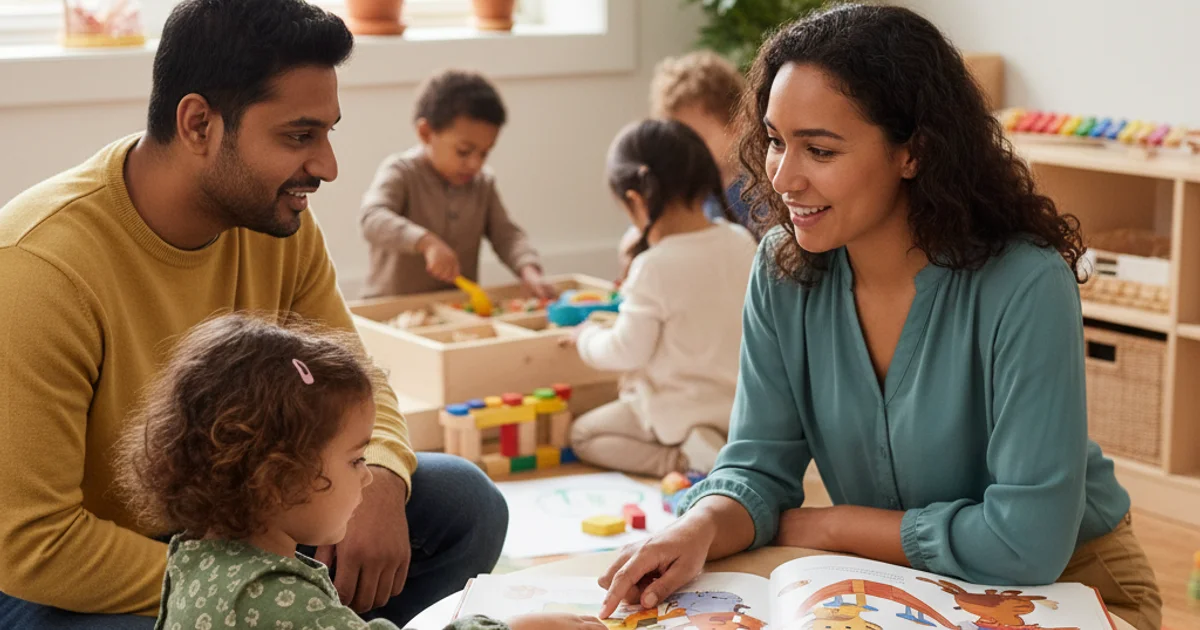
There is a simple truth at the heart of early childhood education: children do best when the important adults in their lives are working together. When parents and teachers communicate openly, share observations, and align their approaches, children experience a consistency and sense of security that accelerates their growth in every domain.
At BrightRoots, we do not view families as clients or customers. We view them as partners — essential collaborators in the work of nurturing their children's development. This partnership is not a nice extra. It is foundational to everything we do.
Why the Partnership Matters
Young children do not experience their lives in compartments. The child who spends the morning at BrightRoots and the afternoon at home is the same child in both settings, carrying experiences, emotions, and questions back and forth between the two worlds. When those worlds are connected, the child feels whole. When they are disconnected, the child may feel confused or unsettled.
Research consistently shows that family engagement in early education is one of the strongest predictors of positive outcomes for children. Children whose families are actively involved in their learning show higher levels of academic readiness, stronger social skills, and greater self-confidence. They also have fewer behavioral challenges and smoother transitions to kindergarten.
The benefits extend to families as well. Parents who feel connected to their child's educators report greater confidence in their parenting, better understanding of child development, and stronger relationships with their children.
What Partnership Looks Like at BrightRoots
Partnership is built on communication, and we invest heavily in creating multiple channels for families and educators to stay connected.
Daily communication. Every day, families receive a brief update on their child's experience — what they played with, what they ate, how they seemed emotionally, and any notable moments. These updates happen through a combination of in-person conversations at pickup, brief written notes, and our family communication app. They may seem small, but they signal to families that their child is seen and known.
Regular conferences. Twice a year, we hold formal parent-teacher conferences where educators share developmental observations, celebrate growth, and discuss goals for the months ahead. These conversations are two-directional. We want to hear from families about what they are observing at home, what questions they have, and what matters most to them.
Open-door policy. Families are welcome to visit our classrooms at any time. We want parents to see what their child's day looks like, to meet the friends their child talks about, and to observe the learning in action. This transparency builds trust and gives families a richer understanding of our approach.
Family events. Throughout the year, we host events designed to bring families together and strengthen the community around our children. Potluck dinners, holiday celebrations, family workdays in the garden, and parent education workshops all provide opportunities for connection beyond the daily drop-off and pickup routine.
Tips for Strengthening the Partnership
Whether your child attends BrightRoots or another program, here are some ways to build a strong relationship with your child's educators.
Share information about your child's life at home. If there has been a big change — a new sibling, a move, a shift in routine — let the teachers know. This context helps them understand and respond to your child's behavior more effectively.
Ask open-ended questions. Instead of "Did my child have a good day?" try "What did my child seem most interested in today?" or "How did they handle the transition to nap time?" These questions invite richer, more informative responses.
Trust the process. If your child is having a tough week, resist the urge to panic. Talk to the teachers, share your concerns, and work together on a plan. Most challenges in early childhood are temporary and respond well to consistent, patient support from the adults in the child's life.
Express appreciation. Teachers pour their hearts into this work, and a simple thank-you goes a long way. Acknowledging their effort and expertise strengthens the relationship and creates a positive foundation for collaboration.
A Shared Commitment
At BrightRoots, we know that we are only part of your child's story. You are the first and most important teacher your child will ever have. Our role is to support, extend, and complement the love and learning that begins at home. Together, we can give every child the strong start they deserve.