
When adults think about learning, they often picture classrooms with desks, textbooks, and structured lessons. But for children under the age of six, learning looks very different. It looks like building a tower of blocks and watching it tumble. It looks like mixing colors at an easel or pretending to run a grocery store with friends. It looks, in a word, like play.
At BrightRoots, play-based learning is at the heart of everything we do. Our programs are designed around the understanding that young children learn best when they are actively engaged, following their curiosity, and making sense of the world through hands-on exploration.
What the Research Tells Us
Decades of research in developmental psychology and neuroscience confirm that play is essential for healthy brain development. During the first five years of life, the brain forms more than one million new neural connections every second. Play stimulates these connections by engaging multiple areas of the brain simultaneously, including those responsible for language, problem-solving, motor skills, and emotional regulation.
A landmark study published in the journal Pediatrics found that children who participate in regular, high-quality play experiences show stronger executive function skills, which include the ability to focus attention, hold information in working memory, and shift flexibly between tasks. These skills are among the strongest predictors of academic success in elementary school and beyond.
Additional research from the American Academy of Pediatrics highlights that play reduces stress hormones in young children and promotes the development of resilience. When children engage in pretend play, they practice managing emotions, negotiating with peers, and coping with frustration in a safe, low-stakes environment.
What Play-Based Learning Looks Like
Play-based learning is not unstructured chaos. In a well-designed early learning environment, educators set up intentional play experiences that target specific developmental goals while allowing children the freedom to explore and direct their own learning.
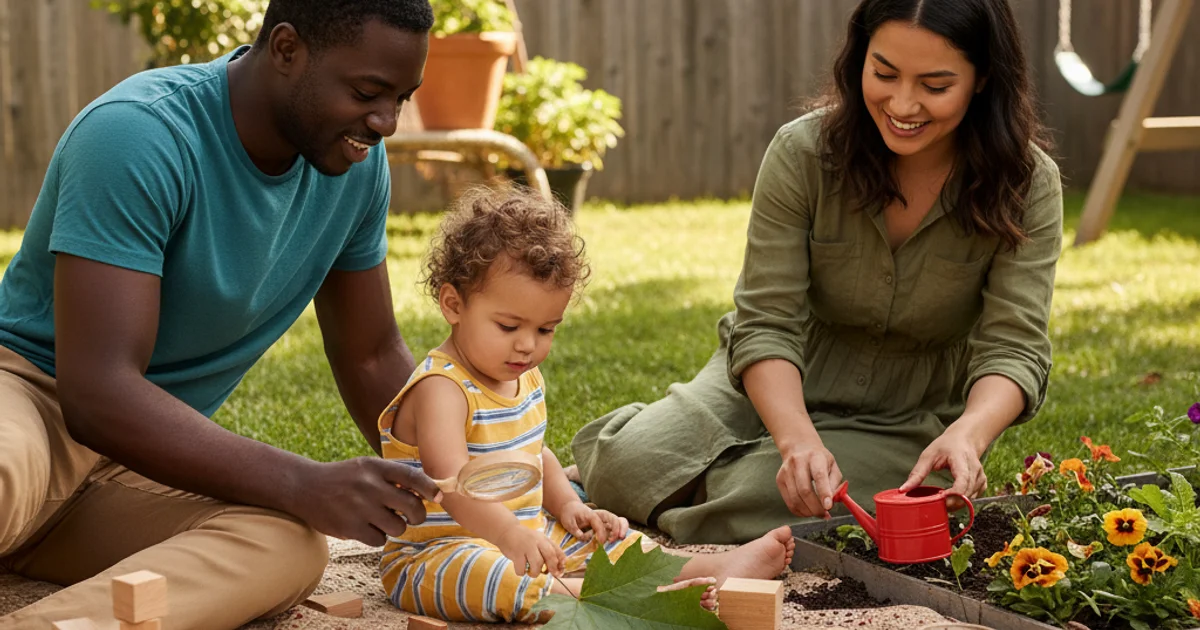
At BrightRoots, this might look like a sensory table filled with sand and measuring cups where children practice early math concepts like volume and comparison. It might look like a dramatic play corner stocked with dress-up clothes and props where children develop language skills and social understanding. Or it might look like an outdoor nature walk where children collect leaves, ask questions, and learn about the natural world.
The key is that the child is an active participant, not a passive recipient. Teachers observe, ask open-ended questions, and gently extend the learning without taking over.
How Parents Can Support Play at Home
You do not need a fully equipped classroom to support play-based learning. Some of the most powerful learning experiences happen with everyday materials and simple interactions.
Follow your child's lead. When your child is engaged in play, resist the urge to direct the activity. Instead, observe what interests them and ask questions that extend their thinking. If they are building with blocks, you might ask what they are constructing or whether they can make it taller.
Provide open-ended materials. Items like cardboard boxes, scarves, wooden blocks, art supplies, and kitchen utensils can become anything in a child's imagination. These materials encourage creative thinking far more than single-purpose electronic toys.
Make time for unstructured play. In a world of packed schedules, free play time is often the first thing to go. Try to protect at least 30 to 60 minutes each day for your child to play without screens, structured activities, or adult direction.
Play together. Some of the richest learning happens when adults and children play side by side. Join your child in their imaginary world, build alongside them, or read a story and act it out together. Your presence and engagement signal that their play matters.
The BrightRoots Approach
In our Early Learning program, every activity is designed with developmental goals in mind, but from the child's perspective, it is simply play. Our educators are trained to create rich, responsive environments where children feel safe to take risks, ask questions, and discover at their own pace.
If you would like to learn more about our play-based programs or see our learning spaces in action, we invite you to schedule a visit. Every child deserves the chance to learn the way nature intended, through the joy of play.