
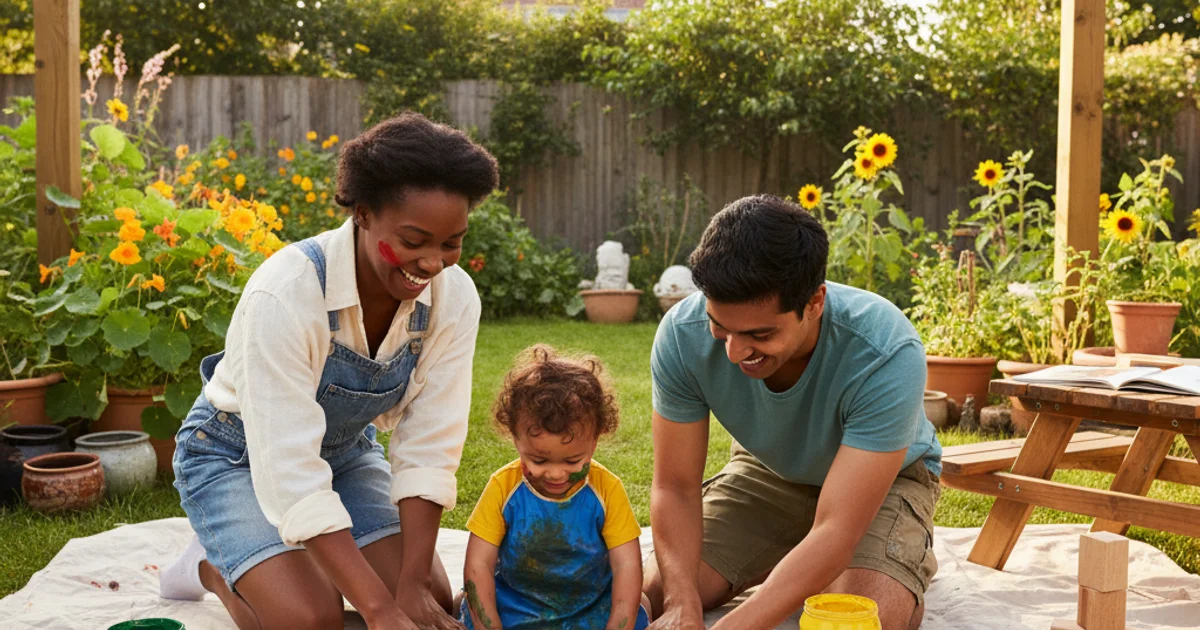
Let us be honest — sensory play is messy. There will be paint on the table, sand on the floor, and water splashed in places you did not expect. For many parents, this can feel stressful, especially at home where cleanup falls on already busy shoulders. But if there is one thing we want every family to understand, it is this: messy play is not wasted time. It is some of the most valuable learning your child will do.
At BrightRoots, sensory experiences are built into every day. From water tables to mud kitchens to finger painting, we create opportunities for children to explore the world through all of their senses. Here is why it matters so much.
Building Neural Pathways
Every time your child squishes play dough, pours water between containers, or runs their fingers through sand, they are sending information to their brain through multiple sensory channels simultaneously. This multisensory input stimulates the formation of neural connections in areas responsible for learning, memory, and problem-solving.
Research in neuroscience has shown that the brain develops most rapidly in the first five years of life, and sensory experiences are a primary driver of that development. Children who have rich, varied sensory experiences build stronger and more flexible neural networks, which support learning across all domains.
Developing Fine Motor Skills
Sensory play materials naturally strengthen the small muscles in children's hands and fingers. Pinching, squeezing, pouring, scooping, and molding all require the kind of precise hand movements that children will later need for writing, buttoning, zipping, and using utensils. The beauty of sensory play is that children build these skills without realizing they are working — they are simply having fun.
Language and Vocabulary Growth
Sensory experiences provide a rich context for language development. As children explore different textures, temperatures, and materials, they need new words to describe what they are experiencing. Is the slime sticky or slimy? Is the water warm or cool? Is the sand rough or smooth?
Adults can support this by narrating the child's experience and introducing descriptive vocabulary in context. These words stick because they are connected to real, embodied experiences rather than abstract definitions.
Emotional Regulation
There is a reason that many occupational therapists use sensory activities to help children manage big emotions. Sensory play has a naturally calming effect on the nervous system. The rhythmic motion of pouring water, the deep pressure of kneading dough, and the grounding sensation of running hands through dry rice all help regulate the body's stress response.
For children who are feeling anxious, overstimulated, or upset, a sensory bin can be a powerful tool for returning to a state of calm. Over time, children learn to seek out these regulating experiences on their own.
Social Skills and Cooperation
When children share a sensory table or work together on a messy project, they practice negotiation, turn-taking, and collaborative problem-solving. Sensory play creates a natural context for social interaction because it is open-ended and non-competitive. There is no right or wrong way to explore, which reduces conflict and invites cooperation.
Embracing the Mess at Home
You do not need a fully equipped sensory lab to bring these experiences home. Here are a few simple ways to get started.
Set boundaries, not barriers. Designate a specific area for messy play — a kitchen floor, a bathtub, or an outdoor space. Lay down a plastic sheet or old towel. When children know where messy play happens, cleanup becomes manageable.
Start simple. A bowl of dried pasta with measuring cups. A tray of shaving cream. A bin of water with sponges. You do not need special materials to create rich sensory experiences.
Let go of the outcome. Sensory play is about the process, not the product. Resist the urge to direct the activity or create a specific result. Let your child explore freely.
Involve your child in cleanup. Washing the table, sweeping the floor, and wringing out sponges are all sensory experiences in themselves — and they teach responsibility too.
At BrightRoots, we say that the messiest children are often the ones learning the most. So roll up your sleeves, protect the furniture, and let your little one dive in.