
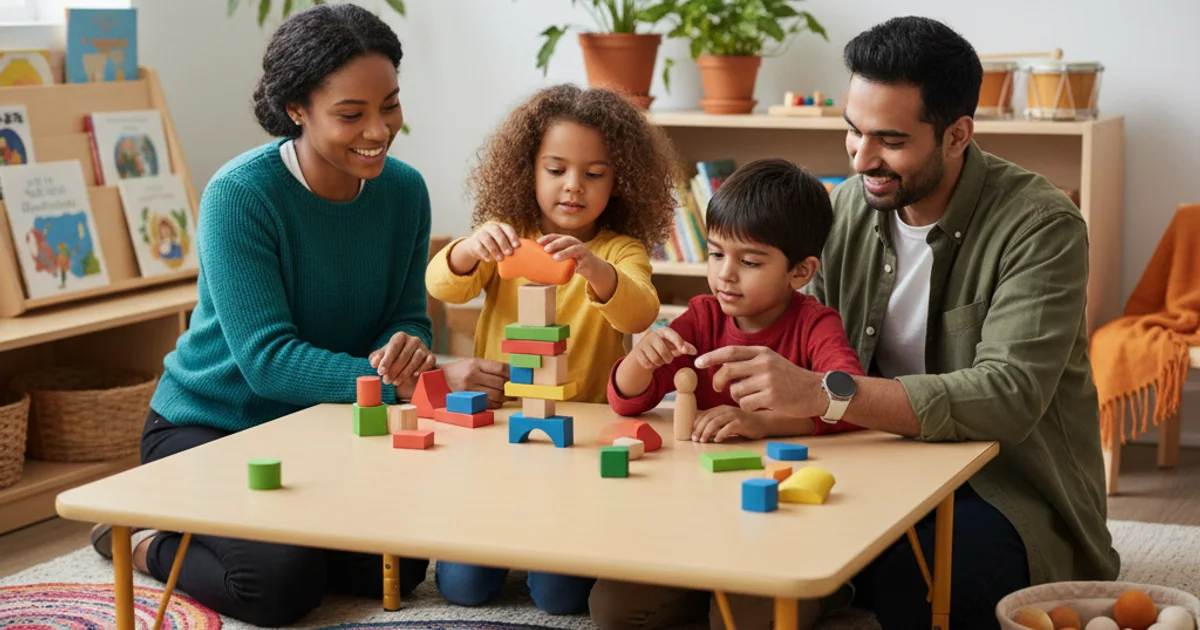
When parents think about school readiness, they often focus on the academic basics — knowing letters, counting to ten, writing their name. These skills certainly matter, but decades of research tell us that something else matters even more: social-emotional competence. A child who can manage their emotions, get along with others, express their needs, and bounce back from setbacks is better positioned for success in school and in life than a child who can recite the alphabet but struggles to navigate relationships.
At BrightRoots, social-emotional learning is not an add-on or a separate curriculum. It is woven into every interaction, every routine, and every moment of the day.
What Are Social-Emotional Skills?
Social-emotional skills encompass a wide range of abilities that help children understand and manage their own emotions, develop empathy for others, build and maintain relationships, make responsible decisions, and handle challenging situations effectively.
In early childhood, these skills show up in everyday moments. Can a child wait for their turn on the swing? Can they use words to express frustration instead of hitting? Can they recognize when a friend is sad and offer comfort? Can they recover from a disappointment without falling apart? These capacities are not innate talents — they are skills that develop over time with support, practice, and modeling from caring adults.
Why It Matters So Much
A landmark study that followed children from preschool into adulthood found that social-emotional skills measured in kindergarten were a stronger predictor of outcomes at age twenty-five than academic test scores. Children who demonstrated strong social-emotional competence in their early years were more likely to graduate from high school, attend college, hold stable employment, and maintain healthy relationships.
The reverse is also true. Children who enter school without basic social-emotional skills are at greater risk for behavioral problems, academic difficulties, and social isolation. The good news is that these skills are highly teachable, especially during the early years when the brain is most plastic and responsive to social learning.
How We Teach It at BrightRoots
Social-emotional learning at BrightRoots is not confined to a circle time lesson or a feelings chart on the wall, though we use both. It happens in real time, in the context of real relationships and real situations.
Emotional literacy. We help children build a vocabulary for their inner experiences. Instead of simply telling a crying child to stop, we help them name what they are feeling. "It looks like you are feeling frustrated because the puzzle piece will not fit. That is a hard feeling." Over time, children learn to identify and communicate their emotions independently.
Conflict resolution. When disagreements arise — and they will — our educators guide children through a simple problem-solving process. We help them express their perspective, listen to the other child, and brainstorm solutions together. This does not happen overnight, but with consistent practice, even very young children develop impressive negotiation skills.
Empathy building. We read stories about characters who experience different emotions and situations. We talk about how other people might feel and why. We celebrate acts of kindness and caring within the classroom. And we model empathy in our own interactions with children and with each other.
Self-regulation. We teach children concrete strategies for managing big emotions, including deep breathing, taking a break in a cozy corner, squeezing a stress ball, or asking for a hug. We also maintain predictable routines and transitions, which reduce anxiety and give children a sense of control.
Supporting Social-Emotional Growth at Home
Parents play the most important role in their child's social-emotional development. Here are a few strategies that make a real difference.
Name emotions frequently, both your child's and your own. When you say, "I am feeling a little stressed right now, so I am going to take three deep breaths," you are modeling emotional awareness and healthy coping.
Validate feelings before problem-solving. When your child is upset, resist the urge to immediately fix the situation. First, acknowledge what they are feeling. "You are really disappointed that we cannot go to the park today. I understand." Once they feel heard, they are much more open to finding a solution.
Create opportunities for cooperative play. Playdates, group activities, and even household chores done together give children practice in sharing, taking turns, and working as a team.
The social-emotional skills your child develops now will serve them for the rest of their lives. At BrightRoots, we are honored to be part of that journey.
Want to learn more about how we support social-emotional development? Join one of our parent workshops on building emotional literacy at home, or schedule a classroom visit to see these practices in action. Our team is always available to share strategies and resources — just reach out.