
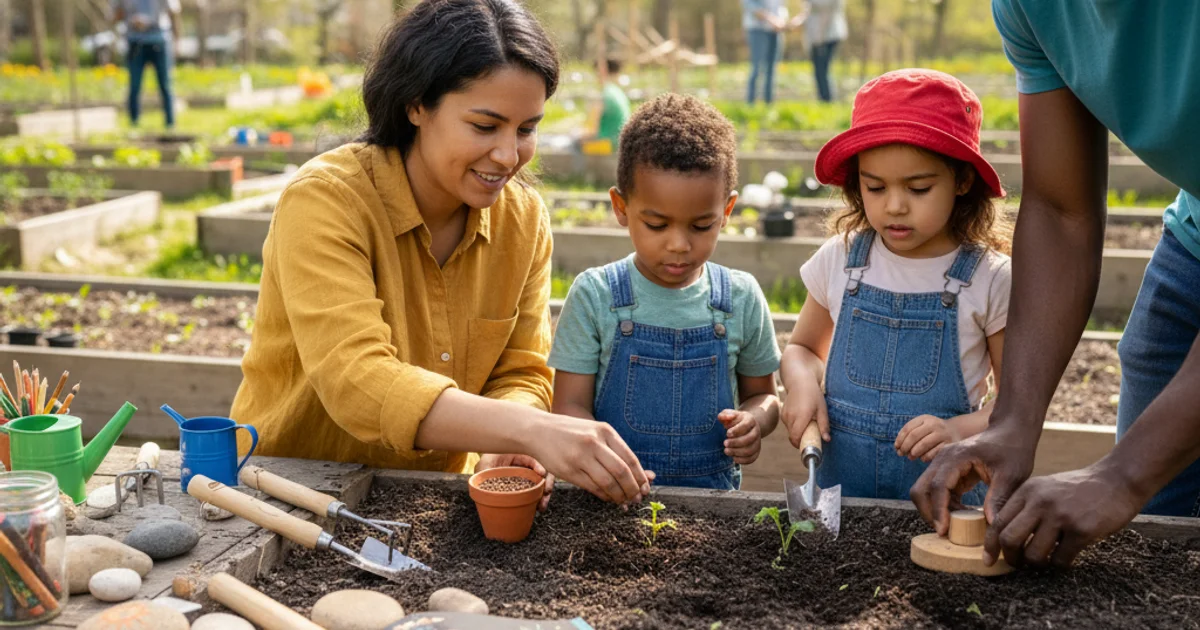
Spring has arrived at BrightRoots, and that means one thing for our Nature Explorers program: it is time to garden. Over the past two weeks, our children have been preparing raised beds, sorting seeds, and learning about the fascinating journey from tiny seed to full-grown plant. The excitement is palpable — and the learning is already blooming.
Our community garden has been a cornerstone of BrightRoots programming for several years, but each spring brings a fresh crop of young gardeners eager to dig in. This year, we are growing sunflowers, cherry tomatoes, snap peas, lettuce, basil, and marigolds — a mix chosen for quick growth cycles, sensory interest, and child-friendly harvesting.
Why Gardening Matters for Young Learners
Gardening is one of those rare activities that touches nearly every developmental domain at once. It builds scientific thinking as children observe changes, ask questions, and test predictions. It develops math skills through measuring, counting, and comparing. It strengthens fine and gross motor skills through digging, planting, watering, and harvesting. And it nurtures social-emotional growth through patience, responsibility, and the experience of caring for something living.
Perhaps most importantly, gardening connects children to the natural world in a direct, hands-on way. In a time when many young children have limited contact with nature, the garden provides a space where the rhythms of the earth become tangible and real.
A Week in the Garden
Our garden sessions follow a gentle routine that balances structure with exploration. Each visit begins with a group observation — what has changed since last time? Children notice new sprouts, taller stems, visiting insects, and changes in the soil. These observations are recorded in simple garden journals using drawings and dictated words.
After observation time, the children move into hands-on work. This might include planting new seeds, watering existing beds, pulling weeds, or adding compost. Every task is scaled to be developmentally appropriate, with child-sized tools and plenty of adult support.
The sessions close with a group reflection where children share what they noticed, what surprised them, and what they want to learn more about. These conversations are rich with vocabulary, critical thinking, and the kind of genuine wonder that makes early education so special.
Lessons Beyond Botany
Some of the most powerful learning in the garden has nothing to do with plants. Children learn about patience when they plant a seed and have to wait days for it to sprout. They learn about responsibility when they understand that living things need consistent care. They learn about disappointment when a seedling does not survive, and about resilience when they try again.
The garden also teaches cooperation. Beds are shared, watering cans are passed, and the harvest belongs to everyone. Children negotiate tasks, help each other, and celebrate group achievements. These social skills are just as important as any academic content.
Bringing the Garden Home
You do not need a yard or a raised bed to garden with your child. A few pots on a windowsill, a recycled container on a balcony, or even a clear plastic bag taped to a window with a damp paper towel and a bean seed can bring the magic of growing things into your home.
Here are a few tips for gardening with young children at home. Choose fast-growing plants so children can see results within days rather than weeks. Sunflowers, beans, and radishes are excellent choices. Let your child be hands-on with every step, from filling pots with soil to watering and observing. Keep a simple growth chart or photo log so your child can track changes over time.
What Comes Next
As the season progresses, our garden activities will expand to include harvesting, tasting, and simple cooking projects. Children will make salads with lettuce they grew, taste cherry tomatoes warm from the vine, and learn about the connection between the garden and the kitchen.
We are also planning a family garden day in May, where parents and siblings are invited to join us for planting, crafts, and a picnic among the raised beds. It promises to be a beautiful celebration of growth in every sense of the word.
If you would like to learn more about our Nature Explorers program or support our garden with material donations or volunteer time, please reach out to our programs team. Every seed we plant together is an investment in our children's future.